

A 75 lb Lab who spots a squirrel can turn a calm walk into waterskiing. I’ve been on the wrong end of that leash more times than I can count, and it’s the reason I care so much about harnesses. My pick for most Labs is a front-clip harness with a padded chest, and of the six I tested, the 2 Hounds Design Freedom scored highest.
I tested these harnesses on Labs a few years ago and have now re-scored every one against the same criteria we use across the site. You’ll see what each one does well and, just as important, what bugs me about it.
Quick note: if you buy through my links, LabraJoy may earn a small commission from Amazon or Chewy. It doesn’t change what I recommend, and it doesn’t cost you anything extra.
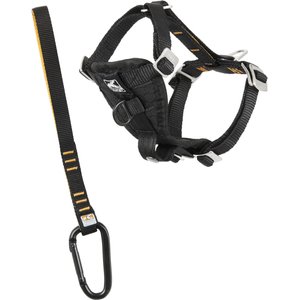
- Enhanced strength crash
- 5 adjustment points for customization
- Includes a seat belt loop
- Pet seat belt can also be used as a short lead for training
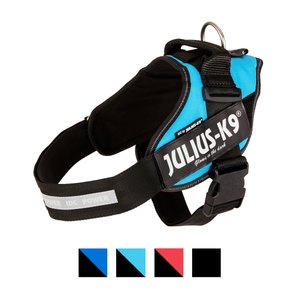
- Designed for the needs of working dogs
- Soft, breathable Eco-Tex inner liner
- Handle-fixing option
- Broad reflective chest strap and glow-in-the-dark
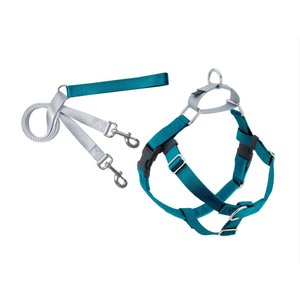
- Included double connection training leash
- Stainless steel hardware and heavy-duty nylon
- Made in the USA with four points of adjustability
- Patented design reduces twisting, straining, and pulling
The best harnesses for Labs at a glance
Here’s how they scored, highest first:
| Harness | Leash clips | Best for | LabraJoy score | My take |
|---|---|---|---|---|
| 2 Hounds Design Freedom No Pull | Front and back | Pullers | 8.5 / 10 | My top pick |
| Kurgo Tru-Fit Enhanced Strength | Front and back | Car travel | 7.7 / 10 | Walks and car rides |
| Carhartt Training Harness | Back | Rough, wet outings | 7.4 / 10 | Tough as work boots |
| OneTigris Tactical Vest | Front and back | Hiking with gear | 7.3 / 10 | Fun, a bit bulky |
| Julius-K9 IDC Powerharness | Back | Handle control | 7.1 / 10 | Great handle, no anti-pull |
| PetSafe Sure-Fit | Back | Calm walkers | 6.8 / 10 | Budget everyday harness |
The leash clip column matters more than any other. A front clip turns a pulling dog back toward you. A back clip is comfortable, but a strong Lab can lean into it and pull harder.
How I tested and scored these harnesses
Every harness went on daily walks, including wet and muddy ones, and I watched for rubbing, slipping and how quickly I could get it on a wriggly dog. Scores follow the harness criteria on our review scoring page:
| Criterion | Weight |
|---|---|
| Fit for 55 to 90 lb dogs | 25% |
| Pull control | 20% |
| Comfort | 20% |
| Durability and hardware | 15% |
| Water and drying | 10% |
| Value | 10% |
That water score comes from long experience. Buck has worn a Ruffwear Front Range harness for four years, and while its padded chest panel stopped any chafing on long hikes, its belly straps soak up lake water and take forever to dry in cold weather. For a Lab, that matters.
2 Hounds Design Freedom No Pull Harness (best for pullers)
LabraJoy score: 8.5 / 10
This is the harness I’d hand to anyone whose Lab drags them down the street. It has a front ring and a back ring, and the included double-ended leash clips to both. That gives you two points of contact, so you can steer instead of just holding on.
When I tested it, the pulling dropped noticeably, especially in those squirrel moments when a Lab forgets you exist. The chest strap behind the front legs is lined with soft velvet, and in my experience, that’s exactly where cheaper harnesses rub a Lab raw. It’s also made in the USA, with stainless steel hardware.
| Criterion | Score |
|---|---|
| Fit for 55 to 90 lb dogs | 9 |
| Pull control | 9 |
| Comfort | 9 |
| Durability and hardware | 8 |
| Water and drying | 6 |
| Value | 8 |
What I like:
- Front and back clips with a two-point leash included
- Velvet lining stops rubbing behind the legs
- Four adjustment points for a close fit
What bugs me:
- Takes a minute to adjust the first time
- Nylon webbing stays damp after a swim
- Double Connection Training Leash
- Discourages the "opposition reflex,"
- Swiss Velvet Lining
- Four Points of Adjustability
- Front Control Point and easy to use
- Suitable for Different Lifestages
- Possible Chafing despite the Swiss Velvet Lining
- Durability
- Cost
Ruffwear Front Range, the harness Buck wears
LabraJoy score: 8.1 / 10
This one isn’t in the comparison boxes, but it’s the harness I know best, so it belongs here. Buck has worn a Ruffwear Front Range for four years. Its padded chest panel has prevented any chafing on long hikes, and the two leash points (front and back) made teaching him to walk at heel much easier.
The downside is water. The belly straps soak up lake water like a sponge and take forever to dry in cold weather, which for a Lab who swims year-round is a real annoyance.
| Criterion | Score |
|---|---|
| Fit for 55 to 90 lb dogs | 9 |
| Pull control | 8 |
| Comfort | 9 |
| Durability and hardware | 9 |
| Water and drying | 4 |
| Value | 7 |
What I like:
- Four years of daily use and still going
- Front clip for training, back clip for relaxed walks
What bugs me:
- Slow to dry after swims, especially in winter
Kurgo Tru-Fit Enhanced Strength Harness (best for car travel)
LabraJoy score: 7.7 / 10
The Kurgo earns its place because it does two jobs. Kurgo says it’s crash tested, and it comes with a seat belt tether, so it doubles as a car restraint. On walks it has a front ring for pullers, five adjustment points and a padded chest plate.
When I bought and tested it, the metal buckles took some getting used to, but once it was adjusted, the Lab wearing it moved freely and seemed perfectly comfortable. If you drive to your walks or take long road trips, this is the one I’d choose.
| Criterion | Score |
|---|---|
| Fit for 55 to 90 lb dogs | 8 |
| Pull control | 7 |
| Comfort | 8 |
| Durability and hardware | 9 |
| Water and drying | 6 |
| Value | 7 |
What I like:
- Doubles as a car safety harness with the included tether
- Strong metal hardware and a padded chest plate
What bugs me:
- Metal buckles are fiddly at first
- Heavier than a basic walking harness
- Enhanced strength and crash-tested design
- No-pull D-ring and 5 adjustable points
- Seat belt loop tether included
- Versatile use as both a car harness and a walking harness
- Padded chest plate for added comfort
- Metal buckles might take some getting used to during fastening
- Limited color options
- Some customers reported challenges in using the seat belt loop tether correctly
Carhartt Training Harness (best for rough, wet outings)
LabraJoy score: 7.4 / 10
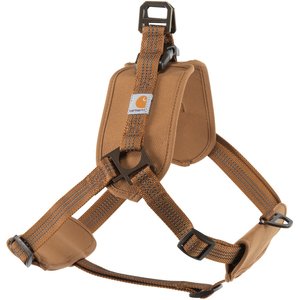
If your Lab spends weekends in mud, brush and water, the Carhartt feels built for it. It pairs nylon webbing with tough duck canvas, and the neoprene padding has a water-repellent coating. Reflective stitching helps on dark evening walks, which I appreciated.
It’s a back-clip harness, so it won’t stop a determined puller on its own, and I wouldn’t expect it to. It’s at its best on a dog who already walks reasonably well.
| Criterion | Score |
|---|---|
| Fit for 55 to 90 lb dogs | 8 |
| Pull control | 5 |
| Comfort | 8 |
| Durability and hardware | 9 |
| Water and drying | 7 |
| Value | 7 |
What I like:
- Very durable materials
- Water-repellent padding and reflective stitching
What bugs me:
- Back clip only, so limited help with pulling
- Durable Construction
- Comfort
- Visibility
- Brand Reputation
- Positive Reviews
- Stitching Concerns
- Bulkiness
- Expectation Mismatch
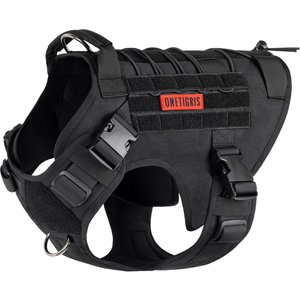
OneTigris Tactical Vest Harness (best for hiking with gear)
LabraJoy score: 7.3 / 10
The OneTigris is a vest-style harness with a heavy nylon shell, soft padding and MOLLE webbing on the sides for clipping on small pouches. When I tested it on longer hikes, the grab handle on top came in handy for pulling the dog close on narrow trails, and the bungee strap held a jacket out of the way.
It’s bulkier and warmer than a strap harness, and you’ll feel that in July. On a hot day I’d leave it at home.
| Criterion | Score |
|---|---|
| Fit for 55 to 90 lb dogs | 7 |
| Pull control | 7 |
| Comfort | 7 |
| Durability and hardware | 9 |
| Water and drying | 6 |
| Value | 8 |
What I like:
- Sturdy handle and MOLLE webbing for gear
- Adjustable neck and chest straps keep it from sliding
What bugs me:
- Hot in summer
- Bulky for everyday walks
- Extra Features
- Water-resistant
- Versatile
- Customizable
- Durable Material
- Plastic D-Rings
- Potential Chafing
- No Front Lead Ring
Julius-K9 IDC Powerharness (best handle control)
LabraJoy score: 7.1 / 10
The Julius-K9 is comfortable and tough. It has a soft, breathable inner lining, a water-repellent outer shell, weather-proof buckles and a reflective chest strap. When I tested it, the Lab moved freely, and the sturdy top handle gave me quick control in busy places.
It’s sometimes sold as a no-pull harness, but it’s a back-clip design, so it won’t turn a pulling dog the way a front clip does. Think of it as a great handle harness, not a pulling fix.
| Criterion | Score |
|---|---|
| Fit for 55 to 90 lb dogs | 7 |
| Pull control | 5 |
| Comfort | 8 |
| Durability and hardware | 9 |
| Water and drying | 8 |
| Value | 6 |
What I like:
- Excellent top handle
- Water-repellent shell dries quickly
What bugs me:
- Back clip only, despite the “no pull” label
- Sizing runs in big jumps, so measure carefully
- Designed for Working Dogs
- Comfort: Soft, breathable Eco-Tex inner liner
- Freedom of Movement
- Nighttime Visibility
- Weatherproof Buckles
- Customizable Labels
- Potential Fitting Issues
- Cost
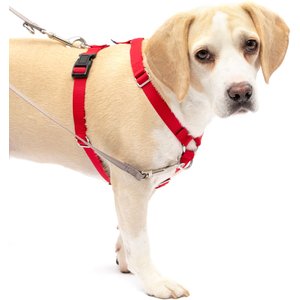
PetSafe Sure-Fit Harness (best budget harness)
LabraJoy score: 6.8 / 10
The Sure-Fit is a simple, affordable harness with five adjustment points and two snap buckles, so it’s quick to put on. When I tested it, it fit snugly and took the pressure off the dog’s throat, which is the main reason to move from a collar to a harness in the first place.
It clips at the back, though, and that’s the catch. For a Lab that pulls hard, it’s comfortable but won’t change the behavior.
| Criterion | Score |
|---|---|
| Fit for 55 to 90 lb dogs | 8 |
| Pull control | 4 |
| Comfort | 7 |
| Durability and hardware | 7 |
| Water and drying | 6 |
| Value | 9 |
What I like:
- Five adjustment points for a good fit
- Quick on and off with snap buckles
What bugs me:
- No front clip for pullers
- Safe for the throat
- On-and-off convenience
- Durable material
- Positive reviews
- Easily adjustable at 5 points
- Sizing issues
- Heavy front metal "O" ring
Harness mistakes I see all the time
Based on my research and plenty of time on Lab-heavy trails, the same handful of mistakes come up again and again:
- Buying a back-clip harness for a dog that pulls, then wondering why the pulling got worse
- Fitting it loose “for comfort”, so it slips off the first time the dog backs up
- Never re-adjusting after a haircut, a weight change or a wet coat
- Leaving the harness on all day, where straps can rub or snag
- Using a harness as a substitute for training, when it’s really a training aid
The first one is the big one. A back clip puts the leash right where a sled dog’s harness attaches, and a Lab will happily lean into it. If your dog pulls, start with a front clip and you’ll feel the difference on the first walk.
Harnesses for senior Labs
Older Labs need a slightly different harness. Buck is 9 now, with early osteoarthritis in his left elbow, so I look for a harness that doesn’t press on the shoulder joint and doesn’t need to be pulled over a sore leg. Step-in designs and harnesses with a sturdy back handle are a real help for lifting a stiff dog into the car or up a step.
I’d pick padding over minimalist straps for a senior, and I’d check the fit more often, since older dogs lose muscle and harnesses loosen. If your dog is stiff or limping, talk to your vet before long walks, whatever harness you use.
Does a Labrador need a harness?
For most Labs, yes. A collar puts all the pressure of pulling on the throat, while a harness spreads it across the chest and shoulders. That matters for any strong puller, and especially for dogs with neck, airway or spine problems. VCA notes that dogs with tracheal collapse should be walked on a harness rather than a collar.
My own rule is simple: a front-clip harness for walking, a flat collar for ID tags. The AKC’s guide to harness vs collar covers the trade-offs well.
If you still prefer a collar for some walks, I’ve reviewed the best collars for Labs too.
A harness also helps with training. A front clip gently turns your dog toward you when he pulls, which makes it easier to reward loose-leash walking. Pair it with reward-based training from my guide on how to train a Labrador.
What size harness does a Labrador need?
Most adult Labs wear a large harness, while some smaller females fit a medium. But brands size differently, so measure rather than guess. Labs vary a lot in build, as my guide to how big Labs get shows.

How to measure:
- Wrap a soft tape measure around the widest part of the ribcage, just behind the front legs
- Measure the neck where a collar would sit
- Compare both numbers with the brand’s size chart
- If you’re between sizes, size up for an adult and down for a fast-growing puppy you’ll refit often
As a rough guide for puppies, a 3-month-old Lab often weighs 20 to 30 lbs and fits a small harness, while a 6-month-old at 35 to 50 lbs usually needs a medium. Recheck the fit every couple of weeks while your puppy grows.

Types of harnesses for Labs
Here’s what each type does and who it suits:
| Harness type | Leash clip | Best for | Watch out for |
|---|---|---|---|
| Front-clip (no-pull) | Chest | Labs that pull | Can rub if fitted loosely |
| Back-clip | Back | Calm walkers, running | Encourages pulling in strong dogs |
| Dual-clip | Chest and back | Training, flexibility | Slightly more fiddly |
| Vest or tactical | Back, sometimes chest | Hiking, carrying gear | Hot in summer |
| Car-safety | Back plus seat belt tether | Road trips | Heavier for everyday walks |
For most Labs, a dual-clip harness is the most useful. You get anti-pull control when you need it and a comfortable back clip once your dog walks nicely. My Labrador harness guide goes deeper into fit and training.
How to fit a harness, step by step
A harness only works if it fits. Here’s how I fit one:
- Loosen all the straps and lay the harness flat so you can see which part goes where
- Slip it over your dog’s head, or step them into it, depending on the design
- Fasten the buckles and center the chest piece on the breastbone
- Tighten the straps until you can fit two fingers under every strap, no more
- Check behind the front legs for rubbing and make sure the strap sits clear of the armpit
- Walk a few steps and watch whether it twists or slides to one side
- Recheck after a week, and again after any weight change
This video shows the fitting process well:
A harness that’s too loose can slip off when a Lab backs up suddenly, and one that’s too tight will chafe. Two fingers is the rule I’d stick to.
FAQ
What is the best harness for a Labrador that pulls?
A front-clip or dual-clip harness, like the 2 Hounds Design Freedom or the Ruffwear Front Range. The front clip turns your dog toward you when he pulls, which works far better than a back clip for strong Labs.
Is a harness better than a collar for a Lab?
For walking, usually yes. A harness spreads pressure across the chest instead of the throat, which is safer for a pulling dog. Keep a flat collar on for ID tags.
What size harness does an adult Lab wear?
Most adult Labs wear a large, and some smaller females fit a medium. Measure the widest part of the ribcage and check each brand’s chart, since sizes vary.
Can a Lab puppy wear a harness?
Yes. Start with a lightweight, adjustable harness and recheck the fit every couple of weeks, because Lab puppies grow fast. Introduce it with treats so your puppy likes wearing it.
Should a Lab wear a harness all the time?
No. Take the harness off at home and in the crate, where straps can snag. Use it for walks and outings, and check the skin under the straps regularly.
Are no-pull harnesses bad for a Lab’s shoulders?
They can be if the design is wrong. Some vets and canine rehab specialists worry that a strap running straight across the front of the chest can limit how freely the shoulders move. I’d choose a Y-shaped front that sits on the breastbone and clears the shoulder joints, fit it properly, and use the front clip as a training tool rather than forever. Once your Lab walks nicely, switching to the back clip for relaxed walks is a good habit.
My final word
If your Lab pulls, start with a front-clip harness and a pocket full of treats. The harness gives you control, but the treats are what actually teach loose-leash walking. Buck’s Ruffwear has seen four years of rain, mud and lake swims, and it’s still the first thing I grab at 7:00 AM.


