


Buck is 9 now, and his left elbow has early osteoarthritis. That changed how I look at dog beds. A bed that flattens into a pancake after a few months isn’t just a waste of money for a Lab like him, it’s a stiff walk to breakfast the next morning. My top pick for most Labs is a thick orthopedic foam bed with a washable cover, and the Big Barker scored highest of the seven I looked at.
These beds were reviewed for LabraJoy a few years ago, some in a Lab’s home and some on research. I’ve now re-scored every one against the criteria we use across the site and kept the honest downsides in.
Quick note: if you buy through my links, LabraJoy may earn a small commission from Amazon or Chewy. It doesn’t change what I recommend, and it doesn’t cost you anything extra.
- Orthopedic memory foam with bolster walls
- Ideal for senior dogs or those with joint pain
- Durable, water-resistant liner
- Stylish design blends with home decor
- Easy to clean with a removable, machine-washable cover
- Ideal for large dogs
- 7-inch high-quality foam for joint support
- Integrated headrest for added comfort
- Durable, machine-washable microsuede cover
- Stylish zippered design
- Made in the USA with a 10-year warranty

- Sized at 32 x 22 inches for small to medium dogs (up to 50+ lbs)
- Premium orthopedic foam for joint pain relief
- Luxurious quilted polyester cover
- Cotton-padded rim cushion for neck support
- Removable, machine-washable cover
- Give your dog ultimate comfort and support
The best dog beds for Labradors at a glance
Here’s how the seven beds scored, highest first:
| Bed | Foam | Best for | LabraJoy score | My take |
|---|---|---|---|---|
| Big Barker Orthopedic with Headrest | 7-inch orthopedic foam | Big and senior Labs | 8.5 / 10 | The one I’d buy for an older Lab |
| Dogbed4less Memory Foam | Memory foam, waterproof liner | Messy Labs | 7.5 / 10 | Tough denim cover |
| Kopeks Jumbo Orthopedic | Memory foam with headrest | Sprawlers | 7.4 / 10 | Huge and supportive |
| Friends Forever Orthopedic | Memory foam with bolsters | Labs who like a pillow edge | 7.2 / 10 | Comfy, softer cover |
| Laifug Orthopedic Memory Foam | Memory foam, double pillow | Large breeds on a budget | 6.9 / 10 | Firm, maybe too firm |
| Furhaven Orthopedic | Orthopedic foam, plush cover | Cozy nappers | 6.5 / 10 | Soft, wears faster |
| BarksBar Orthopedic | 4-inch foam | Tight budgets | 6.3 / 10 | Cheap, thin cover |
If your Lab is young and healthy, you have more freedom. If your Lab is a senior or has joint problems, put foam thickness and support first, then worry about looks.
How I scored these beds
Each bed was judged on how well it supports a big dog’s joints, how it stands up to digging and chewing, and how easy it is to keep clean. Scores follow the bed criteria on our review scoring page:
| Criterion | Weight |
|---|---|
| Joint support | 30% |
| Chew and dig resistance | 20% |
| Size for a sprawling Lab | 15% |
| Washability | 15% |
| Durability over time | 10% |
| Value | 10% |
Joint support carries the most weight. Labs are prone to hip and elbow problems, and a supportive bed is one of the easiest things you can do to help, especially as your dog ages.
Big Barker Orthopedic Dog Bed with Headrest (best overall)
LabraJoy score: 8.5 / 10
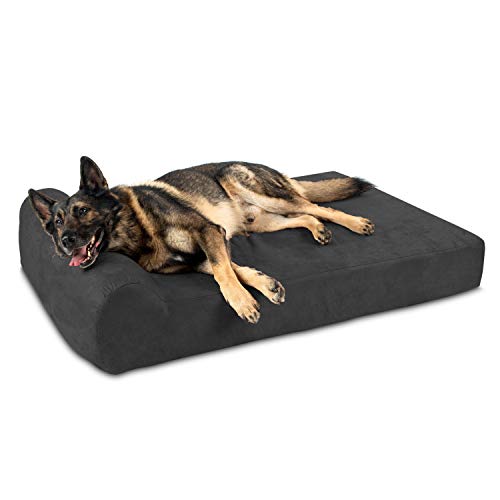
The Big Barker is made in the USA with a 7-inch orthopedic foam base built for large dogs, a microsuede cover that comes off for washing, and a raised headrest that Labs love to drape their chin over. Big Barker backs the foam with a 10-year guarantee that it won’t flatten and will keep at least 90% of its shape, which is rare in this category.
The company also says a study it ran with the University of Pennsylvania’s veterinary school found less pain and stiffness in large dogs sleeping on the bed. That’s company-funded research, so I’d treat the numbers with caution, but the build quality speaks for itself. It’s the bed I’d choose for a senior Lab like Buck.
The price is the catch. It costs several times more than budget beds, although if it saves you from replacing a cheap bed every year, the math gets closer than it looks.
| Criterion | Score |
|---|---|
| Joint support | 10 |
| Chew and dig resistance | 6 |
| Size for a sprawling Lab | 10 |
| Washability | 8 |
| Durability over time | 10 |
| Value | 6 |
What I like:
- Thick, supportive foam with a 10-year anti-flattening guarantee
- Sized properly for big dogs, with a comfy headrest
- Made in the USA
What bugs me:
- Expensive
- The guarantee doesn’t cover chewing or cover damage
Dogbed4less Memory Foam Bed (best for messy Labs)
LabraJoy score: 7.5 / 10
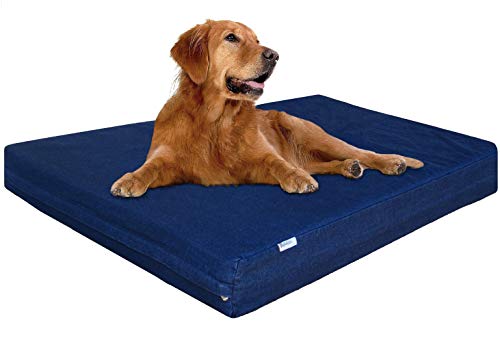
The Dogbed4less Memory Foam Dog Bed earns its place with practical touches. It uses high-density memory foam, a waterproof liner inside, and a tough denim outer cover that stands up to muddy paws better than plush fabrics. When it was reviewed, the waterproof lining and the denim cover were the standout features for a Lab household.
Some owners mention a smell when it’s first unpacked, and a few find the foam firmer or softer than they expected. Airing it out for a day usually takes care of the first issue.
| Criterion | Score |
|---|---|
| Joint support | 8 |
| Chew and dig resistance | 6 |
| Size for a sprawling Lab | 8 |
| Washability | 8 |
| Durability over time | 7 |
| Value | 8 |
What I like:
- Denim cover handles dirt and claws well
- Waterproof liner protects the foam
What bugs me:
- Foam smell at first
- Not chew-proof
Kopeks Jumbo Orthopedic Bed (best for sprawlers)

LabraJoy score: 7.4 / 10
Some Labs sleep curled up. Others stretch out like they’ve been dropped from a height. The Kopeks Jumbo is for the second kind. It has a thick memory foam base, a waterproof liner, a non-skid bottom, a removable plush suede cover and a headrest, all in a very generous size.
It’s big, though. Measure your floor space before ordering, because in a small apartment it can take over a room. A few owners also find it firmer than they’d like.
| Criterion | Score |
|---|---|
| Joint support | 8 |
| Chew and dig resistance | 5 |
| Size for a sprawling Lab | 9 |
| Washability | 8 |
| Durability over time | 7 |
| Value | 7 |
What I like:
- Huge sleeping surface with a headrest
- Waterproof liner and non-skid base
What bugs me:
- Takes up a lot of floor space
- Plush cover isn’t for diggers
Friends Forever Orthopedic Bed (best bolster bed)
LabraJoy score: 7.2 / 10
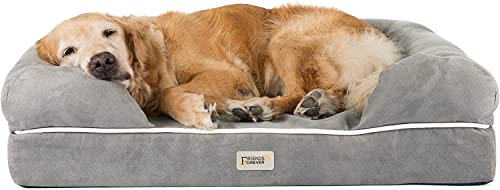
This is the bed we tested at home, and it’s comfortable. The Friends Forever Orthopedic Dog Bed pairs memory foam with bolster walls on the sides, so a Lab can rest his head on the edge. It has a water-resistant liner and a removable, machine-washable cover.
When I tested it, setup took about three minutes, the foam stayed firm after the first few weeks, and the senior Lab sleeping on it limped noticeably less in the mornings. That’s one dog’s experience, not a medical result, but it’s exactly what I’d hope to see from an orthopedic bed.
It scores below the leaders for two reasons: the cover is less tough than denim or microsuede, and it’s pricier than its durability justifies.
| Criterion | Score |
|---|---|
| Joint support | 8 |
| Chew and dig resistance | 5 |
| Size for a sprawling Lab | 8 |
| Washability | 8 |
| Durability over time | 7 |
| Value | 7 |
What I like:
- Supportive memory foam and comfy bolsters
- Quick setup and an easy-wash cover
What bugs me:
- Cover isn’t very tough
- A smell when first unboxed
- The XL is genuinely large, so measure first
Laifug Orthopedic Memory Foam Bed (best budget for large breeds)
LabraJoy score: 6.9 / 10
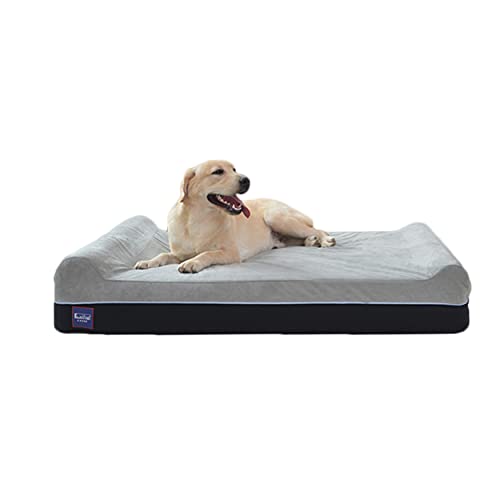
The Laifug has a double-pillow design, memory foam, a waterproof liner and a removable cover, all at a friendlier price than the leaders. Many owners say their dogs took to it straight away and use it for lounging as well as sleeping.
The two complaints that come up most are that it’s too stiff for some dogs and the foam isn’t as thick as expected. For a young, healthy Lab it’s fine. For a senior with sore joints, I’d spend more.
| Criterion | Score |
|---|---|
| Joint support | 7 |
| Chew and dig resistance | 5 |
| Size for a sprawling Lab | 8 |
| Washability | 8 |
| Durability over time | 6 |
| Value | 8 |
What I like:
- Good features for the price
- Waterproof liner and washable cover
What bugs me:
- Can feel stiff
- Foam thickness varies
Furhaven Orthopedic Bed (best for cozy nappers)

LabraJoy score: 6.5 / 10
The Furhaven has a contoured shape, an orthopedic foam base and an ultra-plush faux fur and suede cover that most dogs find irresistible. The cover comes off for washing, and it’s available in sizes up to Jumbo Plus for very large dogs.
Its weakness is durability. Owners often report the foam losing shape and the cover tearing, especially with big, active dogs. The plush fur also traps Lab hair, so expect more lint rolling.
| Criterion | Score |
|---|---|
| Joint support | 6 |
| Chew and dig resistance | 4 |
| Size for a sprawling Lab | 9 |
| Washability | 8 |
| Durability over time | 5 |
| Value | 8 |
What I like:
- Very soft and cozy
- Lots of sizes
What bugs me:
- Foam and cover wear out faster than the leaders
- Plush fabric holds onto shed hair
BarksBar Orthopedic Bed (cheapest option)
LabraJoy score: 6.3 / 10
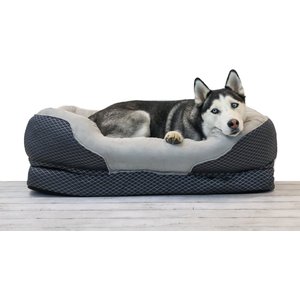
The BarksBar is the bargain of the group. It has 4 inches of orthopedic foam, a soft polyester cover, a cushioned rim and a non-slip rubber bottom that keeps it in place on hard floors. The cover is removable and machine washable.
At this price, there are compromises. The cover is thin and doesn’t stand up to chewing or claws, the sides can feel flimsy, and some owners say the foam is thinner than advertised. For a puppy who might destroy a bed anyway, it’s a sensible first bed.
| Criterion | Score |
|---|---|
| Joint support | 6 |
| Chew and dig resistance | 4 |
| Size for a sprawling Lab | 7 |
| Washability | 8 |
| Durability over time | 5 |
| Value | 9 |
What I like:
- Low price
- Non-slip bottom on hard floors
What bugs me:
- Thin cover
- Foam can feel thinner than expected
What size bed does a Labrador need?
Most adult Labs need a large or extra-large bed. The easy way to check is to measure your dog asleep, stretched out from nose to the base of the tail, then add 8 to 12 inches. Labs sprawl more than you’d think.
Here’s a quick sizing guide:
| Dog’s weight (lbs) | Bed size | Typical length (in) | My take |
|---|---|---|---|
| Under 40 (puppies) | Medium | 30 to 36 | Grows out fast |
| 40 to 65 | Large | 36 to 42 | Small adults who curl up |
| 65 to 90 | Extra-large | 42 to 48 | Most adult Labs |
| Over 90 | Jumbo | 48 and up | Big males and stretchers |
Sizes vary a lot by brand, so compare the actual sleeping area, not just the label. When in doubt, size up.
Which type of bed suits your Lab?
Bed labels get confusing fast. Here’s how the main styles compare for a Labrador:
| Bed type | What it is | Best for | Downside |
|---|---|---|---|
| Orthopedic foam | Thick, supportive foam slab | Seniors, joint problems, big dogs | Can be pricey |
| Memory foam | Foam that molds to the body | Comfort and pressure relief | Cheap versions flatten |
| Bolster | Foam base with raised sides | Dogs who rest their head on an edge | Sides can get chewed |
| Elevated cot | Fabric stretched on a frame | Hot weather, outdoors | Little cushioning |
| Pillow or plush | Stuffed cushion | Puppies, light sleepers | Little support, traps hair |
From my experience, most adult Labs do best on an orthopedic foam bed indoors with a raised cot outside for summer. Bolsters are a lovely extra for dogs who like to curl up, but they’re the first part a chewer goes for.
Before you buy, check:
- The actual sleeping area in inches, not just the size label
- Whether the cover is removable and machine washable
- That there’s a waterproof liner between the cover and the foam
- The foam thickness, and whether it’s one solid piece or shredded fill
- The warranty, especially what it says about flattening
What makes a good bed for a Lab
Support first
Labs are prone to hip and elbow dysplasia and, later, arthritis. The MSD Veterinary Manual’s overview of joint disorders in dogs explains how common these problems are in large breeds. A thick orthopedic or memory foam base spreads a big dog’s weight so the hips, shoulders and elbows don’t press into the floor.
Look for:
- At least 4 inches of supportive foam, and 6 to 7 inches for seniors
- Foam that springs back when you press it, rather than staying dented
- A low entry edge, so stiff dogs can step in easily
Colorado State University’s guide to arthritis management in dogs lists comfortable bedding alongside weight control and exercise. If your Lab is stiff or limping, talk to your vet too. Buck’s own stiffness improved with a vet-guided plan, not just a new bed.
Chewing and digging
Young Labs destroy beds. At 10 months, left alone in the yard, Buck chewed through a heavy-duty nylon leash and half a wooden patio chair leg in under 20 minutes, and a plush bed wouldn’t have stood a chance. For puppies and adolescents, I’d choose a cheap bed or a tough cover, and save the expensive orthopedic bed for later.
Easy cleaning
Labs bring the outdoors in. A removable, machine-washable cover and a waterproof liner are the two features I’d never skip, because they keep the foam dry and fresh.
Keeping cool
Labs run warm, and a foam bed can feel hot in summer. An elevated cot-style bed lets air flow underneath, is easy to hose off and works well outdoors or on a porch. Many owners keep an orthopedic bed indoors and a raised cot outside.
Best bed materials for Labs
Here’s how common bed materials hold up to a Lab:
| Material | Good for | Watch out for |
|---|---|---|
| Orthopedic or memory foam | Joint support | Cheap foam flattens |
| Denim or canvas cover | Durability, muddy paws | Less cozy |
| Microsuede | Softness that’s still tough | Shows hair |
| Faux fur or plush | Comfort and warmth | Traps hair, chewable |
| Waterproof liner | Protecting the foam | Can feel warm |
A water-resistant liner under the cover is worth more than any fancy fabric. It’s what keeps a wet Lab from soaking the foam and turning the bed sour.
Beds for Labs with allergies
If your Lab has allergies, the bed can help or hurt. Dust mites love warm, fabric-filled beds, so what matters most is how easy the bed is to keep clean, not a “hypoallergenic” label.
My tips:
- Choose a tightly woven cover, like microfiber or tight cotton, that resists dust mites
- Wash the cover every week or two in hot water
- Pick a bed with a waterproof liner so the foam doesn’t hold moisture
- Avoid deep plush fabrics that trap hair and dander
A clean bed also matters for your Lab’s comfort and emotional well-being. Dogs settle best in a familiar, comfortable spot that smells like home.
How much should you spend on a Lab bed?
It depends on your dog’s age and habits more than anything. I think about it in three tiers:
- Puppy or chewer: keep it cheap and replaceable until the chewing stops
- Healthy adult: a mid-range orthopedic bed with a washable cover and waterproof liner covers most needs
- Senior or joint problems: this is where a premium, thick-foam bed earns its price
A cheap bed that flattens in six months and gets replaced twice a year can end up costing as much as a premium bed that lasts for years. For an older Lab, I’d put the money into the bed before almost any other gear.
How to clean a dog bed properly
A Lab’s bed gets dirty fast, and a smelly bed usually means moisture has reached the foam. Here’s the routine I’d follow:
- Shake out or vacuum loose hair before washing, so it doesn’t clog your machine
- Wash the cover in warm water with a mild, fragrance-free detergent
- Spot-clean the liner and let it dry completely
- Air the foam in the sun if it smells, but never put foam in a washing machine
- Make sure everything is fully dry before you put it back together
Washing the cover every week or two is plenty for most Labs, and more often if your dog swims a lot or has skin allergies.
Do Labradors like blankets?
Most do. Plenty of Labs love to dig, circle and burrow into a blanket, and many owners find a blanket on top of the bed helps an anxious dog settle. I’ve written more about why Labradors like blankets.

A few cautions: skip blankets with loose threads or tassels for puppies who chew, and wash blankets as often as the bed cover. For a senior Lab with joint pain, a blanket on top of a supportive bed adds warmth, but it can’t replace the support of good foam.

Beds for Lab puppies
Puppies are a special case. A Lab puppy will chew, dig and have accidents, often all in the same week, so this isn’t the time for an expensive orthopedic bed. Based on my research and plenty of shredded bedding, I’d start with something cheap, washable and easy to replace, or a tough crate pad, and upgrade once your dog is past the chewing stage, usually somewhere around 18 months to 2 years.
A few puppy tips:
- Put the bed in or next to the crate, so it becomes the place to sleep
- Give a safe chew toy at bedtime, so the bed itself isn’t the chew toy
- Wash the cover often during house training
- Take the bed away for a while if your puppy starts tearing it apart, and try again later
Growing Lab puppies need plenty of sleep, often 18 hours or more a day, so a comfortable spot still matters. It just doesn’t need to be a fancy one yet.
How to get your Lab to use a new bed
Some Labs flop onto a new bed straight away. Others ignore it for days and go back to the sofa. To speed things up:
- Put the new bed where your dog already likes to sleep
- Add an old blanket or T-shirt that smells like home
- Toss a few treats on it and praise your dog for lying down there
- Leave it unwashed for the first few days so it picks up your dog’s scent
Foam beds sometimes have a “new” smell when they’re unboxed. Letting the bed air out for a day before introducing it helps sensitive noses.
When to replace a dog bed
Even good beds wear out. I’d replace a bed when:
- The foam stays dented or your dog’s hips touch the floor through it
- The cover is torn and the foam is exposed to chewing
- Odor remains after washing the cover, which often means the foam is wet inside
- Your dog starts avoiding the bed or struggles to get up from it
That last one is worth taking seriously. A dog who suddenly stops using a bed may be uncomfortable, and new stiffness or reluctance to lie down is a reason to check in with your vet, not just to buy a new bed.
Outdoor and travel beds
Labs love being outside, and a separate outdoor bed saves your good one from mud and rain. An elevated cot with a sturdy frame is ideal on a porch or deck, since it keeps your dog off hot or wet ground and hoses clean in seconds. For road trips, a folding travel mat or a cot that packs flat gives your Lab a familiar place to settle in a new spot, which helps a lot in hotels and rentals.
Where to put your Lab’s bed
Location matters almost as much as the bed. I’d put the main bed somewhere quiet but close to the family, away from drafts and direct heat, and on a non-slip surface. Senior Labs especially appreciate a bed near where you spend your evenings. If your Lab sleeps in a crate, a thin, chew-resistant crate pad works better than a thick bed, and my guide on what size crate a Labrador needs covers fitting one.
FAQ
What is the best bed for a senior Labrador?
A thick orthopedic foam bed with a low entry edge and a washable cover. Look for 6 to 7 inches of supportive foam, like the Big Barker, and pair it with your vet’s advice on managing joint pain.
What size bed does an adult Lab need?
Most adult Labs need a large or extra-large bed, roughly 42 to 48 inches long. Measure your dog stretched out asleep and add 8 to 12 inches.
Are orthopedic beds worth it for Labs?
For adult and senior Labs, yes. Labs are prone to hip and elbow problems, and a supportive bed spreads their weight and helps them get up more easily. For chewing puppies, a cheaper bed makes more sense until they mature.
How often should I wash my Lab’s bed?
Wash the cover every one to two weeks, more often if your Lab swims or has allergies. A waterproof liner keeps the foam itself clean between washes.
What bed can a Lab not destroy?
No bed is truly indestructible. For heavy chewers, choose a tough canvas or denim cover, avoid plush and stuffing, and supervise until your dog is past the chewing phase.
Should my Lab sleep on my bed instead?
That’s your call, and plenty of Labs share their owners’ beds happily. I’d still give your dog a supportive bed of his own, though. Jumping on and off a tall human bed is hard on aging elbows and hips, and having a dedicated spot helps with crate training, travel and visits to other people’s homes.
My final word
A good bed is one of the kindest things you can buy for a Lab, especially as the years add up. If your dog is young and still chews, keep it cheap and tough. If your dog is getting older, invest in real support. Buck spends a lot more of his day lying down than he used to, and that’s exactly when the bed underneath him starts to matter.


