

Around age six, Buck started putting on weight even though his portions hadn’t changed. Switching him to a higher-protein, lower-calorie formula and splitting his food into three small meals brought him back to 78 lbs in about four months. That’s why I read calories per cup before I read anything else on a bag. The best dog food for a Lab is a complete and balanced large-breed formula with moderate calories, and for adults, Hill’s Science Diet Healthy Mobility Large Breed earned my top score.
I’ve re-scored ten popular foods against the criteria we use for every LabraJoy review. They’re researched, not fed long-term to my own dog, and I’ll explain why that matters for one of them in particular.
Quick note: if you buy through my links, LabraJoy may earn a small commission from Amazon or Chewy. It doesn’t change what I recommend, and it doesn’t cost you anything extra. I’m not a vet, so please check any diet change with yours.
| Image | Product | Features | Price |
|---|---|---|---|
 |
| Check on ChewyCheck on Amazon | |
 |
| Check on ChewyCheck on Amazon | |
 |
| Check on ChewyCheck on Amazon | |
 |
| Check on ChewyCheck on Amazon | |
 |
| Check on ChewyCheck on Amazon |
The best dog foods for Labs at a glance
Here’s how the ten foods scored, highest first:
| Food | Life stage | Calories per cup | LabraJoy score | Best for |
|---|---|---|---|---|
| Royal Canin Labrador Retriever Puppy | Puppy, 8 weeks to 15 months | About 307 | 8.6 / 10 | Lab puppies |
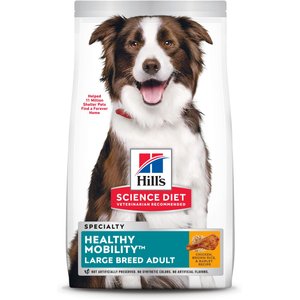
| Hill’s Science Diet Adult Healthy Mobility Large Breed | Adult | About 361 | 8.5 / 10 | Best overall for adults, joints |
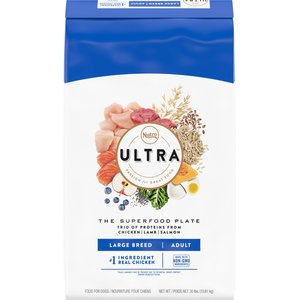
| Nutro Ultra Large Breed Adult | Adult | About 349 | 8.0 / 10 | A quality everyday food |
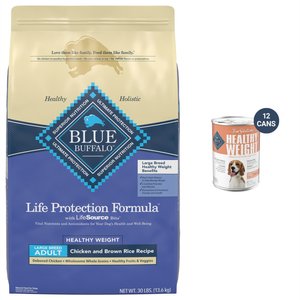
| Blue Buffalo Life Protection Large Breed Adult | Adult | About 355 | 7.8 / 10 | Easy to find |
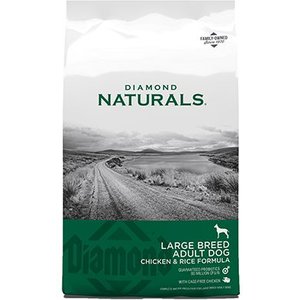
| Diamond Naturals Large Breed Adult Chicken and Rice | Adult | Varies by listing, check the bag | 7.6 / 10 | Budget |
| Wellness Complete Health Senior Chicken and Barley | Senior | About 405 to 416 | 7.3 / 10 | Older Labs |
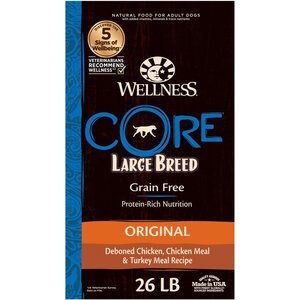
| Wellness CORE Large Breed Adult | Adult | About 336 | 7.2 / 10 | Grain-free, if your vet advises it |
| American Journey Large Breed Adult Chicken and Sweet Potato | Adult | Check the bag | 7.1 / 10 | Grain-free on a budget |
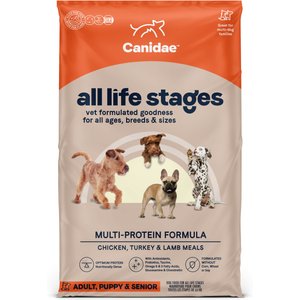
| CANIDAE All Life Stages Chicken, Turkey and Lamb | All life stages | About 506 | 7.0 / 10 | Very active working Labs |
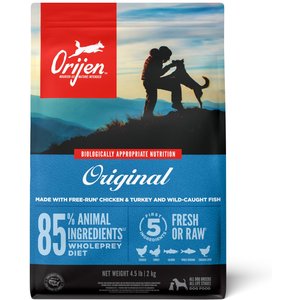
| ORIJEN Original | All life stages | About 473 | 6.6 / 10 | Not for most pet Labs |
That calorie column is the one I’d check first. A cup of the densest food here has about 65% more calories than a cup of the lightest, and a Lab will happily eat either.
How I scored these foods
Every food here was scored on its published label: the AAFCO statement, ingredients, calorie content and feeding guide, plus each brand’s recall history and nutrition expertise. Scores come from the seven weighted dog food criteria on our review scoring page:
| Criterion | Weight |
|---|---|
| Nutritional adequacy | 25% |
| Ingredient and protein quality | 20% |
| Calorie density and weight control | 15% |
| Large-breed and life-stage fit | 15% |
| Digestibility and sensitivities | 10% |
| Brand transparency and safety | 10% |
| Value per day | 5% |
Nutritional adequacy means an AAFCO “complete and balanced” statement for the right life stage, and any food without one is a dealbreaker. For brand transparency, I lean on the World Small Animal Veterinary Association’s nutrition guidelines, which suggest asking whether a company employs qualified nutritionists, who formulates its diets and how it tests them.
Calorie density gets real weight because Labs gain weight so easily. Researchers at the University of Cambridge found that about one in four Labradors carries a gene variant linked to stronger food motivation and higher body weight. In other words, many Labs really are hungrier than other dogs.
Here’s a personal note: Buck has a mild sensitivity to chicken meal, and almost every food here contains chicken. If your Lab has a food sensitivity, the ranking matters less than the ingredient list, and your vet should guide the choice.
Royal Canin Labrador Retriever Puppy (best for puppies)
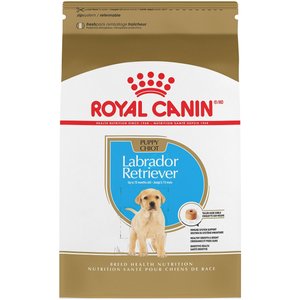
LabraJoy score: 8.6 / 10 (researched)
This is the food I’d suggest to most new Lab puppy owners. It’s made specifically for purebred Labrador puppies from 8 weeks to 15 months, at about 307 kcal per cup, which is moderate for a puppy food. That matters, because large-breed puppies that grow too fast are at higher risk of joint problems.
Royal Canin is one of the brands that meets the WSAVA questions well, with in-house nutritionists and its own research. The ingredient list leads with chicken by-product meal and includes corn gluten meal, which puts some owners off. Nutritionally, those are legitimate protein sources, but if ingredient names matter to you, this won’t be your pick.
| Criterion | Score |
|---|---|
| Nutritional adequacy | 10 |
| Ingredient and protein quality | 6 |
| Calorie density and weight control | 9 |
| Large-breed and life-stage fit | 10 |
| Digestibility and sensitivities | 8 |
| Brand transparency and safety | 10 |
| Value per day | 5 |
What I like:
- Made for Lab puppies, with moderate calories for steady growth
- Strong nutrition expertise behind the brand
What bugs me:
- By-products and corn gluten high on the list
- Expensive for a dog who’ll eat a lot of it
- Tailor-Made Nutrition
- Specialized Kibble
- Immune System Support
- Digestive Aid
- Bone and Joint Health
- Weight Management
- Breed-Specific
- Age Limit
- Price
- Availability
- Allergenic Ingredients
- Flavor Varieties
Hill’s Science Diet Adult Healthy Mobility Large Breed (best overall for adults)
LabraJoy score: 8.5 / 10 (researched)
For an adult Lab, this is the food I’d look at first. It’s a large-breed adult formula at about 361 kcal per cup, with EPA from fish oil and natural sources of glucosamine and chondroitin aimed at joint health. Labs are prone to hip and elbow problems, so joint support in the everyday food is a sensible extra.
Hill’s is another brand with deep nutrition expertise and published research. The main ingredients are chicken meal, rice, barley and sorghum, which is plain but solid. The downsides are price and chicken, if your dog is sensitive to it.
| Criterion | Score |
|---|---|
| Nutritional adequacy | 10 |
| Ingredient and protein quality | 7 |
| Calorie density and weight control | 8 |
| Large-breed and life-stage fit | 9 |
| Digestibility and sensitivities | 7 |
| Brand transparency and safety | 10 |
| Value per day | 7 |
What I like:
- Joint support built into a large-breed adult food
- Moderate calories per cup
- Brand with strong nutrition credentials
What bugs me:
- Chicken meal is the main protein
- Pricier than store brands
- Joint Health Support
- EPA from Fish Oil
- Bone Health
- High-Quality Ingredients
- Skin and Coat Health
- Food Allergies or Sensitivities
- Taste Preference
- Price
Nutro Ultra Large Breed Adult (best everyday food)
LabraJoy score: 8.0 / 10 (researched)
A good-quality large-breed adult food with chicken, lamb and salmon, at about 349 kcal per cup. The formula adds a mix of fruits and vegetables Nutro calls superfoods, uses non-GMO ingredients, and has no artificial colors, flavors or preservatives.
It’s a balanced choice if you want a mainstream food with a stronger ingredient list. The superfoods sound nice on the bag, but they make up a tiny part of the recipe, so don’t pay extra for them alone.
| Criterion | Score |
|---|---|
| Nutritional adequacy | 9 |
| Ingredient and protein quality | 8 |
| Calorie density and weight control | 8 |
| Large-breed and life-stage fit | 8 |
| Digestibility and sensitivities | 7 |
| Brand transparency and safety | 7 |
| Value per day | 7 |
What I like:
- Moderate calories and a large-breed formula
- Multiple named proteins
What bugs me:
- “Superfood” marketing adds little nutritionally
- Still chicken-led
- High Protein Content
- Nutrient-Rich Superfoods
- Quality and Safety
- No Harmful Additives
- Designed for Large Breeds
- Potential Allergenic Ingredients
- Price
- Taste Preference
- Kibble Size and Texture
Blue Buffalo Life Protection Large Breed Adult
LabraJoy score: 7.8 / 10 (researched)
Deboned chicken leads the list, followed by chicken meal, brown rice and barley, at about 355 kcal per cup. It includes glucosamine and chondroitin and omega fatty acids, and it’s in nearly every pet store, which counts for something when you run out on a Sunday.
The original version of this guide called it a weight-control food. It isn’t one. It’s a standard large-breed adult formula with moderate calories, so if your Lab needs to lose weight, look at a dedicated healthy-weight recipe instead. Peas also appear high in the list, even in this grain-inclusive formula.
| Criterion | Score |
|---|---|
| Nutritional adequacy | 9 |
| Ingredient and protein quality | 7 |
| Calorie density and weight control | 8 |
| Large-breed and life-stage fit | 8 |
| Digestibility and sensitivities | 7 |
| Brand transparency and safety | 7 |
| Value per day | 7 |
What I like:
- Easy to find almost anywhere
- Moderate calories for a large-breed adult food
What bugs me:
- Not a weight-loss food, despite how it’s often sold
- Peas fairly high in the ingredient list
- High-Quality Protein
- Weight Management
- Joint Health Support
- Essential Fatty Acids
- Free of Common Allergens
- Poultry Allergies
- Taste Preference
- Price
Diamond Naturals Large Breed Adult Chicken and Rice (best budget pick)
LabraJoy score: 7.6 / 10 (researched)
Diamond Naturals is the value pick: a grain-inclusive large-breed formula with chicken, chicken meal, brown rice and barley, plus glucosamine, chondroitin and probiotics. It’s formulated to meet AAFCO profiles for adult maintenance, and it costs noticeably less per day than most foods here.
Two things to check. Retailers list different calorie figures for this bag, so read the calorie statement on the one you buy before you measure portions. And Diamond had a well-known Salmonella recall in 2012, which is why its brand-safety score is lower, even though the line has been sold widely since.
| Criterion | Score |
|---|---|
| Nutritional adequacy | 9 |
| Ingredient and protein quality | 7 |
| Calorie density and weight control | 7 |
| Large-breed and life-stage fit | 8 |
| Digestibility and sensitivities | 7 |
| Brand transparency and safety | 5 |
| Value per day | 10 |
What I like:
- The best value per day here
- Grain-inclusive, with joint support added
What bugs me:
- Calorie figures differ between listings
- Brand recall history
- Quality Ingredients
- Real Cage-Free Chicken
- Nutrient-Rich Recipe
- Joint, Skin, and Coat Support
- Digestive and Immune Support
- Free from Common Allergens
- Price
- Potential Chicken Allergies
- Grain Inclusion
- Taste Preferences
Wellness Complete Health Senior Chicken and Barley (best for seniors)
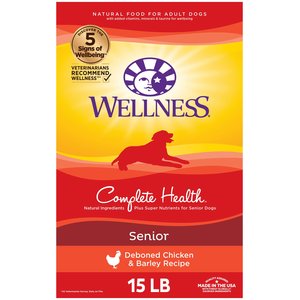
LabraJoy score: 7.3 / 10 (researched)
A grain-inclusive senior food with deboned chicken, chicken meal, oatmeal, barley and brown rice, plus glucosamine, omega fatty acids and antioxidants. For an older Lab, the joint support and the gentle grains are good choices.
The problem is calories. Listings put it at roughly 405 to 416 kcal per cup, which is a lot for a senior dog who’s slowing down. If you choose it, measure carefully and watch his waistline. It isn’t made specifically for large breeds either.
My guide to senior Labrador care covers how an older Lab’s needs change beyond food.
| Criterion | Score |
|---|---|
| Nutritional adequacy | 9 |
| Ingredient and protein quality | 7 |
| Calorie density and weight control | 6 |
| Large-breed and life-stage fit | 7 |
| Digestibility and sensitivities | 7 |
| Brand transparency and safety | 7 |
| Value per day | 6 |
What I like:
- Senior formula with joint support
- Gentle, grain-inclusive recipe
What bugs me:
- High calories for a less active dog
- Not large-breed specific
- Whole-Body Nutritional Support
- High-Quality Ingredients
- Beneficial Additives
- No Harmful Ingredients
- Taste Preference
- Grains Included
- Cost
- Availability
Wellness CORE Large Breed Adult (grain-free)
LabraJoy score: 7.2 / 10 (researched)
On paper this is a strong food: high protein from chicken and turkey, a large kibble, and about 336 kcal per cup. The original guide listed it as a senior food, but it’s an adult large-breed formula.
So why the lower score? It’s grain-free, with lentils and peas high in the ingredient list. The FDA has been investigating a possible link between some diets, many of them grain-free and high in peas or lentils, and a heart disease called dilated cardiomyopathy (DCM). No cause has been proven, but I avoid grain-free food for a Lab unless a vet says there’s a medical reason for it.
| Criterion | Score |
|---|---|
| Nutritional adequacy | 9 |
| Ingredient and protein quality | 7 |
| Calorie density and weight control | 8 |
| Large-breed and life-stage fit | 7 |
| Digestibility and sensitivities | 6 |
| Brand transparency and safety | 4 |
| Value per day | 6 |
What I like:
- High protein and moderate calories
- Large kibble suits a big dog
What bugs me:
- Grain-free, with legumes high on the list
- Expensive
- High-Quality Proteins
- Nutrient-Rich Superfoods
- Whole-Body Health Support
- Grain-Free and No Artificial Additives
- Larger Kibble Size
- Poultry Allergies
- Price
- Taste Preference
American Journey Large Breed Adult Chicken and Sweet Potato
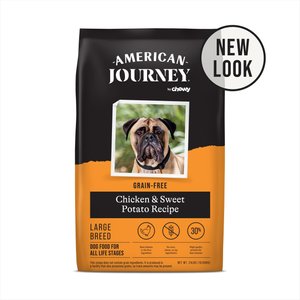
LabraJoy score: 7.1 / 10 (researched)
Chewy’s own brand, with deboned chicken first, then chicken meal, turkey meal, peas and chickpeas. It’s a grain-free large-breed formula with glucosamine and chondroitin, and it’s cheaper than most premium foods.
It has the same grain-free concern as Wellness CORE, with peas and chickpeas high in the list. The listing I checked didn’t show a calorie figure for this exact recipe, so check the bag before you set portions.
| Criterion | Score |
|---|---|
| Nutritional adequacy | 9 |
| Ingredient and protein quality | 7 |
| Calorie density and weight control | 6 |
| Large-breed and life-stage fit | 8 |
| Digestibility and sensitivities | 6 |
| Brand transparency and safety | 3 |
| Value per day | 9 |
What I like:
- Good price for a large-breed formula
- Named meats first
What bugs me:
- Grain-free, with legumes high on the list
- Little published information on who formulates it
- High-Protein
- Large-Kibble
- Joint-Support
- Digestive Health
- Allergen-Free
- Nutrient-Dense
- Potential Grain Traces
- Transition Required
- Taste/Dietary Restrictions
CANIDAE All Life Stages Chicken, Turkey and Lamb
LabraJoy score: 7.0 / 10 (researched)
This multi-protein food is formulated to meet AAFCO profiles for all life stages, including growth of large dogs (70 lb or more as adults). That makes it a legitimate option for a multi-dog household or a puppy.
The catch is energy density. At about 506 kcal per cup, it’s the most calorie-dense food here. For a working gun dog in the field all day, that’s useful. For a typical pet Lab, it’s very easy to overfeed, because a “normal” cup is a lot of food.
| Criterion | Score |
|---|---|
| Nutritional adequacy | 9 |
| Ingredient and protein quality | 7 |
| Calorie density and weight control | 4 |
| Large-breed and life-stage fit | 7 |
| Digestibility and sensitivities | 7 |
| Brand transparency and safety | 6 |
| Value per day | 8 |
What I like:
- AAFCO all life stages, including large-breed growth
- Fewer cups per day, so a bag lasts
What bugs me:
- The most calorie-dense food here
- Easy to overfeed an average pet Lab
- All Life Stages Formula
- High-Quality Proteins
- HealthPLUS Solutions
- Free of Common Allergens
- Protein Sources
- Taste Preferences
- Price
ORIJEN Original
LabraJoy score: 6.6 / 10 (researched)
ORIJEN has a reputation for ingredient quality, with a long list of fresh and raw animal ingredients from chicken, turkey and fish. If you judge food only by its meat content, it looks like the best food here.
For most Labs, it isn’t. At about 473 kcal per cup, with more than 40% of its calories from fat, it’s very rich for a breed that puts on weight easily. It’s grain-free, and ORIJEN was among the brands most often named in reports to the FDA during its DCM investigation. It also isn’t a large-breed formula.
| Criterion | Score |
|---|---|
| Nutritional adequacy | 9 |
| Ingredient and protein quality | 9 |
| Calorie density and weight control | 3 |
| Large-breed and life-stage fit | 5 |
| Digestibility and sensitivities | 6 |
| Brand transparency and safety | 5 |
| Value per day | 5 |
What I like:
- Very high animal-protein content
What bugs me:
- Rich and calorie-dense for a Lab
- Grain-free and expensive
- High-Quality Ingredients
- WholePrey Diet
- Supports Overall Health
- Potential Allergenic Ingredients
- Price
- Availability
What a Lab actually needs from his food
Labs aren’t complicated eaters, but they’re big, food-driven and prone to weight gain. A few things matter more than anything printed on the front of the bag.
The first is the AAFCO statement on the back, which most people don’t read. It tells you whether the food is complete and balanced, and for which life stage. For a Lab puppy, look for “growth” or “all life stages including growth of large size dogs (70 lb or more as an adult)”. You can read more about the standards on the AAFCO website.
The second is calories, and that’s where most owners go wrong. Two foods can look identical and differ by more than 100 kcal a cup. Always set portions from the calorie statement and your dog’s body condition, not from the feeding chart alone. My guide on how much to feed a Lab per meal goes through the numbers.
Here’s how needs change across a Lab’s life:
| Life stage | What to look for | Common mistake |
|---|---|---|
| Puppy (to about 15 months) | Large-breed growth formula, controlled calcium and calories | Feeding adult or small-breed puppy food |
| Adult (1 to 7 years) | Large-breed adult formula, moderate calories, quality protein | Free-feeding, or ignoring treat calories |
| Senior (7+ years) | Fewer calories, joint support, easy digestion | Keeping the same portions as activity drops |
| Working or very active | Higher calories and fat during heavy work | Keeping working portions in the off-season |
Puppy nutrition deserves its own read, and my guide to Lab puppy nutrients covers it in detail.
Why keeping a Lab lean matters so much
This is the part I’d want every Lab owner to know. In Purina’s long-running Life Span Study, Labradors fed 25% less than their littermates had a median lifespan of 13.0 years, compared with 11.2 years for the dogs fed normally. At age 8, 10% of the lean dogs had osteoarthritis in several joints, compared with 77% of the others.
Those numbers are why Buck’s weight gain worried me so much, and they matter even more now that he has early arthritis in one elbow. Every extra pound is more load on joints that are already sore.
From my experience, the practical rules are simple:
- Feel for the ribs: you should feel them easily under a thin layer of fat
- Count treats as part of the daily food, not on top of it
- Measure meals with a real measuring cup or a kitchen scale
- Split food into two or three meals instead of one
If your Lab is gaining weight, cut portions gradually and talk to your vet before you change foods. My guide to Labrador weight and growth shows healthy ranges by age.
Grain-free, raw and other popular diets
Grain-free food became popular on the idea that grains are fillers or allergens. In reality, most food allergies in dogs involve animal proteins like beef, dairy or chicken rather than grains, and the FDA’s ongoing DCM investigation is a reason for caution. Unless your vet recommends it, I’d choose a grain-inclusive food for a Lab.
Raw diets are another trend I’d approach very carefully. Based on my research, the risks of bacterial contamination and nutrient imbalance are real, and a quality kibble or a properly balanced cooked diet is safer for most homes.
Wet food isn’t off the table either. It’s tasty and adds water to the diet, which can help picky or older dogs, but it’s expensive to feed a 70 lb dog entirely on cans, and it spoils quickly once opened. Many owners mix a spoonful into kibble as a topper, which works well as long as you count its calories.
How to switch your Lab to a new food
Don’t change food overnight. Switch slowly, over about a week or a little longer, so your Lab’s stomach can adjust. A simple schedule:
- Days 1 and 2: 75% old food, 25% new
- Days 3 and 4: half and half
- Days 5 and 6: 25% old, 75% new
- Day 7: all new food
If you see loose stools, slow down and stay at the last step for a few extra days. A puppy moving to adult food follows the same idea, and my guide on when to switch a Lab puppy to adult food covers the timing. In this video, Dr. Lee Danks explains a simple approach:
Cameron Wimble of The Dog Nutritionist shares another way to reduce stomach upsets during a switch:
Watch your dog during the change. Persistent diarrhea, vomiting, itching or low energy are signs the new food may not suit him, and that’s a conversation for your vet. Digestion takes time, as my guide on how long it takes a Lab to digest food explains, so judge a food over weeks, not days.
Setting a feeding schedule
Labs do best on a routine, and they’ll remind you when it’s dinner time. Puppies usually eat three or four times a day, and most adults do well on two meals, morning and evening. Splitting the food this way helps with hunger, which matters for a breed that’s always looking for the next meal. My guide on how often to feed a Labrador has schedules by age.
Don’t free-feed a Lab. Leaving a full bowl out almost always leads to weight gain, and it makes it hard to notice when your dog goes off his food, which can be an early sign of illness.
FAQ
What is the best dog food for a Labrador?
For an adult Lab, a complete and balanced large-breed formula with moderate calories is best. Hill’s Science Diet Adult Healthy Mobility Large Breed scored highest for adults in my review, and Royal Canin Labrador Retriever Puppy scored highest for puppies.
How many calories does a Labrador need per day?
It depends on weight, age and activity, so there’s no single number. Many moderately active adult Labs need somewhere around 1,300 to 1,700 kcal a day, but your vet can calculate a target from your dog’s ideal weight and body condition.
Is grain-free food bad for Labs?
Not necessarily, but there’s reason for caution. The FDA has investigated a possible link between some grain-free diets high in peas or lentils and a heart condition called DCM. Unless your vet recommends grain-free, a grain-inclusive food is the safer default.
When should a Lab puppy switch to adult food?
Most Labs switch between about 12 and 15 months, once they’re close to their adult size. Royal Canin’s Labrador puppy food, for example, is made for puppies up to 15 months. Ask your vet if your puppy is very large or still growing.
Why is my Lab always hungry?
Many Labs genuinely are hungrier than other dogs. Cambridge researchers found that about one in four Labradors carries a gene variant linked to stronger food motivation. Feed measured meals, use treats from the daily allowance and keep him lean rather than feeding to his appetite.
My final word
There’s no perfect food for every Lab, but there’s a simple formula for a healthy one: a complete and balanced food for his life stage, the right calories, and an owner who measures. Buck still acts like he hasn’t eaten in a week every evening at dinner time, and I’ve learned to ignore that look.


