
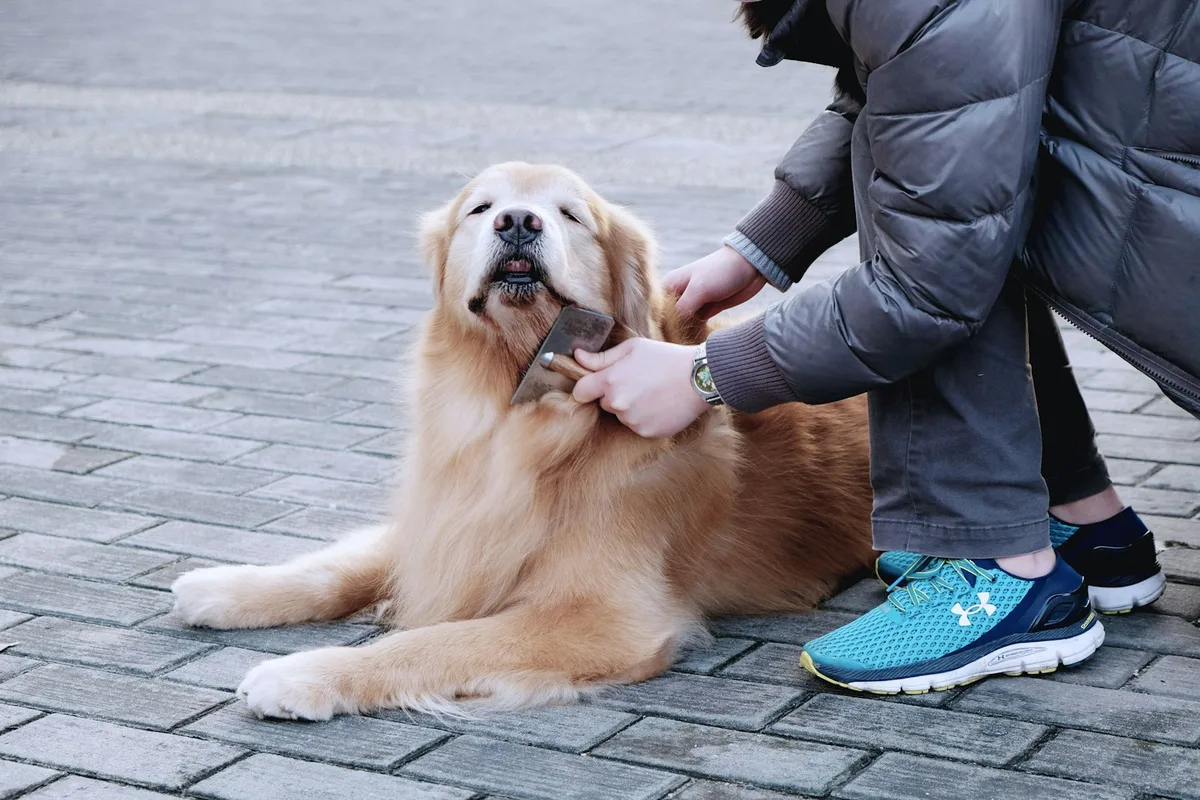
Yes, Golden Retrievers shed, and they shed a lot: the AKC gives the breed a shedding score of 4 out of 5, with a steady moderate shed all year and one or two heavy coat blows. That’s normal Golden Retriever shedding, and no brush, food or haircut will switch it off. What you can control is where the hair ends up, which mostly comes down to brushing more often during the heavy weeks. I’ll cover how bad it gets, when it peaks, puppies, allergies and the routine I’d follow.
How much do Golden Retrievers shed?
A Golden sheds every day, and twice a year it sheds like it’s trying to grow a second dog on your floor. The AKC describes the coat as a thick, water-repellent double coat that Goldens “heavily shed” once or twice a year, plus a more moderate shed the rest of the time.
On the AKC’s 1 to 5 shedding scale, where 5 means “hair everywhere”, the Golden sits at 4. That puts it among the heavier shedders you’ll meet at a dog park. I lived with my old Golden, Buster, and I share my house with Buck, a yellow Lab, so I’ve vacuumed up both kinds of hair. A Golden’s hair is longer, so you see it more. It drifts into corners in soft tumbleweeds and weaves itself into rugs.
Here’s the AKC’s scorecard for the coat, with my notes beside it:
| Coat trait | AKC rating | My take |
|---|---|---|
| Shedding level (1 to 5) | 4 | Plan on daily hair |
| Coat type | Double | Undercoat is the shedder |
| Coat length | Medium | Long enough to tumbleweed |
| Grooming frequency (1 to 5) | 2 | Weekly brushing, daily in a blow |
The grooming score surprises people. A Golden doesn’t need a groomer every month, but it does need a brush most weeks, and the weeks you skip are the weeks you’ll pay for.
If you’re weighing a Golden against a Lab for your floors, I’ve already compared how Labs and Goldens shed side by side, so I won’t repeat it here. The short version is that both breeds score 4.
How bad is Golden Retriever shedding, really?
Bad enough that you’ll own a lint roller for every coat in the closet. It isn’t dangerous, and it isn’t dirty in the way muddy paws are, but it’s constant. Dark couches, black pants and car seats show it first.
Plenty of new owners knew Goldens shed and still didn’t expect the amount. If hair on the furniture would ruin your week, this breed will test you.
Why Goldens shed so much
The answer is the double coat. Goldens grow two layers, and each one has a job.
- The outer coat: longer guard hairs that shed water and burrs, which the AKC compares to a jacket wrapped around the body
- A soft, dense undercoat underneath, for insulation
- Feathering on the legs, chest, tail and ears, which is just longer outer coat
The undercoat is where most of the shedding comes from. It thickens for cold weather, then loosens and falls out in clumps when the dog no longer needs it. The guard hairs shed too, but slowly and one at a time.
So a Golden that never blows its coat would be a Golden without an undercoat. You’d lose the insulation and the water resistance that made the breed useful to hunters in cold, wet country.
Golden Retriever shedding season
The heavy shedding season comes once or twice a year, usually around spring and fall. People call it “blowing coat”, and the name fits. The undercoat lets go in big soft tufts that you can pull out with your fingers.
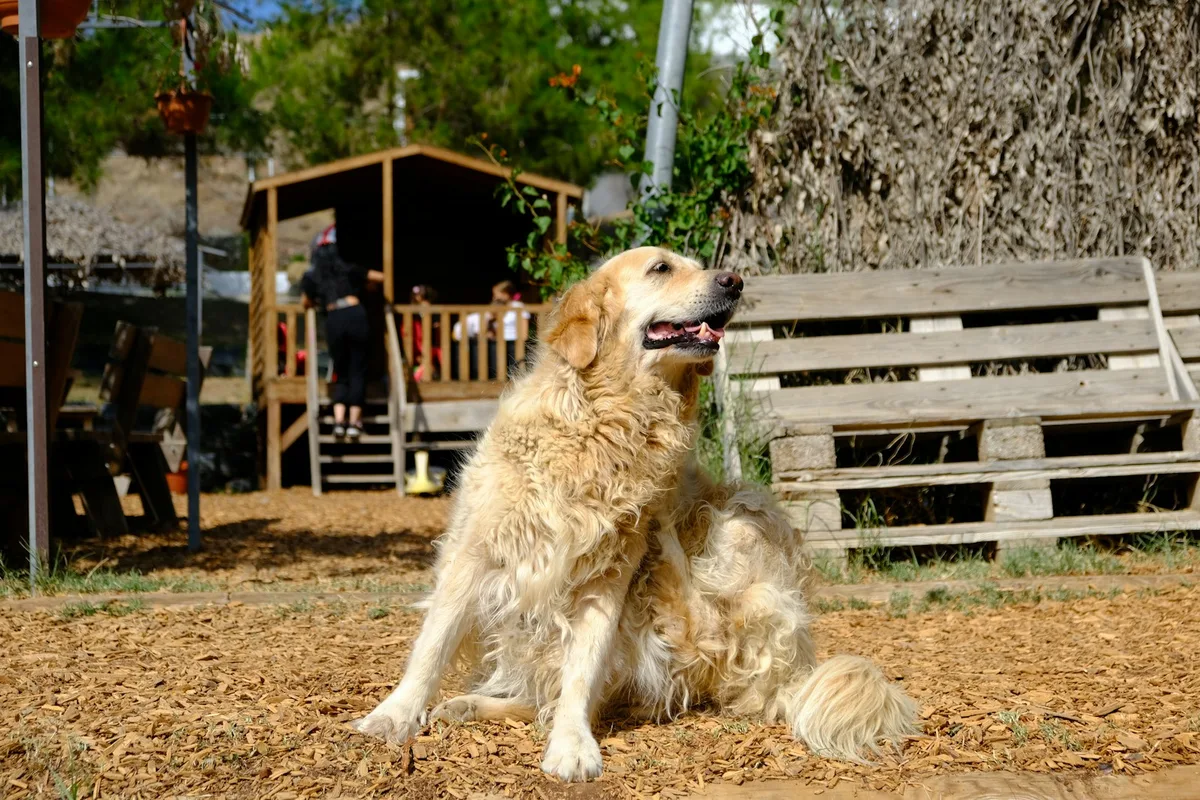
In my experience, the spring blow is the bigger one, since the dog is dropping the thick winter undercoat. Dogs that live mostly indoors with steady heat and lighting often blur the seasons and shed more evenly through the year. A Golden that sleeps by the fireplace all winter may never give you one clean “season”.
This is how the year looks with a Golden, using the AKC’s brushing advice:
| Shedding phase | How often | Brushing | My take |
|---|---|---|---|
| Everyday shed | All year | Once or twice a week | Easy to stay ahead of |
| Coat blow | 1 or 2 times a year | Daily | The tumbleweed weeks |
| After a blow | A few weeks | Weekly again | New undercoat grows in |
The blow usually lasts a few weeks, not a weekend. I’d plan for that and not panic in week two when the brush still comes back full.
What a coat blow looks like at my house
Spring coat blowing is an event at my place. With Buck, I work a rubber curry brush through his coat during the bath, then use a high-velocity dryer, and that combination removes roughly two full grocery bags of undercoat in one afternoon. That’s a Lab. A Golden’s longer undercoat makes the same afternoon even fluffier.
Here are the signs that a blow has started:
- Tufts of soft, pale undercoat stick out of the coat, often on the hips and the back of the thighs
- Your brush fills up after a few strokes
- Hair clumps show up in corners and under furniture within a day of vacuuming
- The coat looks patchy or “moth eaten” for a week or two
That last one worries new owners. It’s normal, as long as the skin underneath looks healthy and there are no bald spots.
Do Golden Retriever puppies shed?
Yes, Golden puppies shed, but lightly at first. A puppy coat is soft and fluffy and doesn’t drop much hair. Real shedding starts when the adult coat comes in.
The AKC says puppies usually lose their puppy coat between 4 and 6 months of age, though some start as early as 3 months and others wait until about 12 months. The adult coat that replaces it is thicker and stiffer, with the undercoat that does most of the shedding.
So the answer to “when do Golden Retriever puppies start shedding” is usually somewhere around that 4 to 6 month mark. You’ll notice the puppy fluff getting patchy along the back first, then darker, coarser hair growing through.
Puppyhood is the best time to get a Golden used to the brush, long before the first big blow. I’d keep sessions to a couple of minutes with treats, a soft brush and lots of breaks. A dog who learned to lie still for the brush at 10 weeks is a far easier dog at 10 months. Our first weeks with a Golden puppy guide has more on handling and early routines.
Are Golden Retrievers hypoallergenic?
No, Golden Retrievers aren’t hypoallergenic, and no dog breed truly is. The Asthma and Allergy Foundation of America says that a truly non-allergic dog or cat does not exist. People react to proteins in dander (dead skin flakes), saliva and urine, not to the hair itself.
Hair still matters, though. It carries dander and saliva around the house and holds it in carpets and couches, so heavy shedders spread allergens further.
The research backs this up. A 2012 Dutch study in the Journal of Allergy and Clinical Immunology measured the main dog allergen, Can f 1, in hair and in homes. The researchers found no evidence that any breed could be called hypoallergenic. Hair samples from the so-called hypoallergenic breeds actually held more allergen than the control breeds, and airborne levels in the homes didn’t differ.
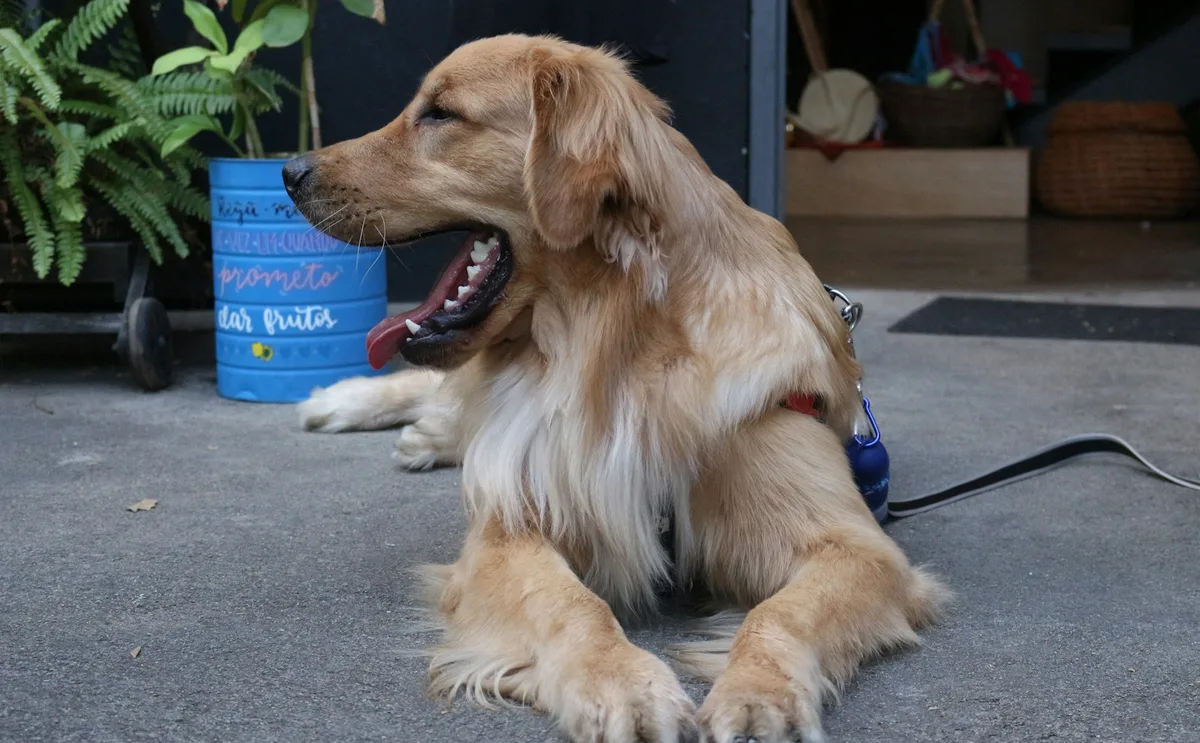
Is there a Golden Retriever that doesn’t shed?
No. Every purebred Golden has a double coat and sheds it. You’ll see “low shedding”, “non shedding” or “hypoallergenic Golden Retriever” in ads, and those dogs are almost always mixes, usually with a Poodle.
A Golden crossed with a Poodle can inherit a curlier, lower-shedding coat, but it’s a coin toss, and even the curliest one still makes allergens. The Golden Retriever Poodle mix guide explains which coat genes decide that. The same goes for “short haired” Goldens, which are a coat look, not a separate breed, and they still shed.
Living with a Golden when you have allergies
Mild allergies and a Golden can sometimes work, but talk to an allergist first. I’d spend real time around Goldens before bringing one home, not a 10 minute meet and greet.
The AAFA suggests a few habits that cut allergen levels at home:
- Keep the dog, and his bed, out of the bedroom
- Run an air cleaner with a HEPA filter for at least four hours every day (the only tip here that costs real money)
- Weekly baths, which may reduce airborne allergens
- Damp dusting
- Change clothes and wash your hands after long cuddles on the couch
The bedroom rule is the one I’d start with. You spend a third of your life in there, and it’s the room you can actually keep clean.
Why is my Golden Retriever shedding so much?
Most of the time, heavy shedding is a normal coat blow, and it’ll stop in a few weeks. Check the calendar first. Then look at the skin.
The Merck Veterinary Manual draws the line clearly. Shedding is abnormal when it leaves obvious bald spots or a thinning coat. Without bald patches, it’s likely just the coat replacing itself.
Non seasonal reasons for extra shedding or hair loss include:
- Allergies, parasites such as fleas, and skin infections, which usually come with itching
- Thyroid problems (more on that below)
- Pregnancy and nursing
- A few weeks after a severe illness or a high fever
- Rubbing from a collar that fits badly
- A poor diet, especially one short on protein, according to Merck
Buck has a mild sensitivity to chicken meal, so I read food labels closely. Skin and coat trouble is often where a food issue shows up first. I’m not a vet, though, so if you suspect food, ask yours before switching.
Thyroid trouble is common in Goldens
Hypothyroidism deserves its own mention for this breed. The Golden Retriever Club of America says about one in four of its members’ Goldens develop hypothyroidism, based on its first breed health survey. A thin, brittle coat is one of the signs, and the tail feathering can thin out until the tail looks almost bald.
Other clues include weight gain without eating more, low energy and a dog who seeks out warm spots. Our guide to the health problems Goldens are prone to covers it alongside the other conditions in the breed.
When to call the vet about shedding
Most shedding needs a brush, not a vet. These signs are different:
| What you see | Usually normal? | What I’d do |
|---|---|---|
| Hair clumps in spring or fall, healthy skin | Yes | Brush daily |
| Bald patches or a thinning tail | No | Book a vet visit |
| Red, scabby or smelly skin | No | Vet visit soon |
| Constant scratching or licking | No | Check for fleas, then vet |
| Dull, dry coat plus weight gain | No | Ask about a thyroid test |
| Hair that doesn’t regrow after clipping | No | Vet visit |
Your vet knows your dog, and itchy skin with hair loss needs a vet’s eye, not a new shampoo. Please don’t add supplements or switch foods to fix a coat until you know what’s causing the problem.
How to control Golden Retriever shedding
You can’t stop a Golden from shedding. You can catch most of the hair on a brush before it reaches the floor. Based on my research and years of brushing retrievers, the routine matters more than any single product.
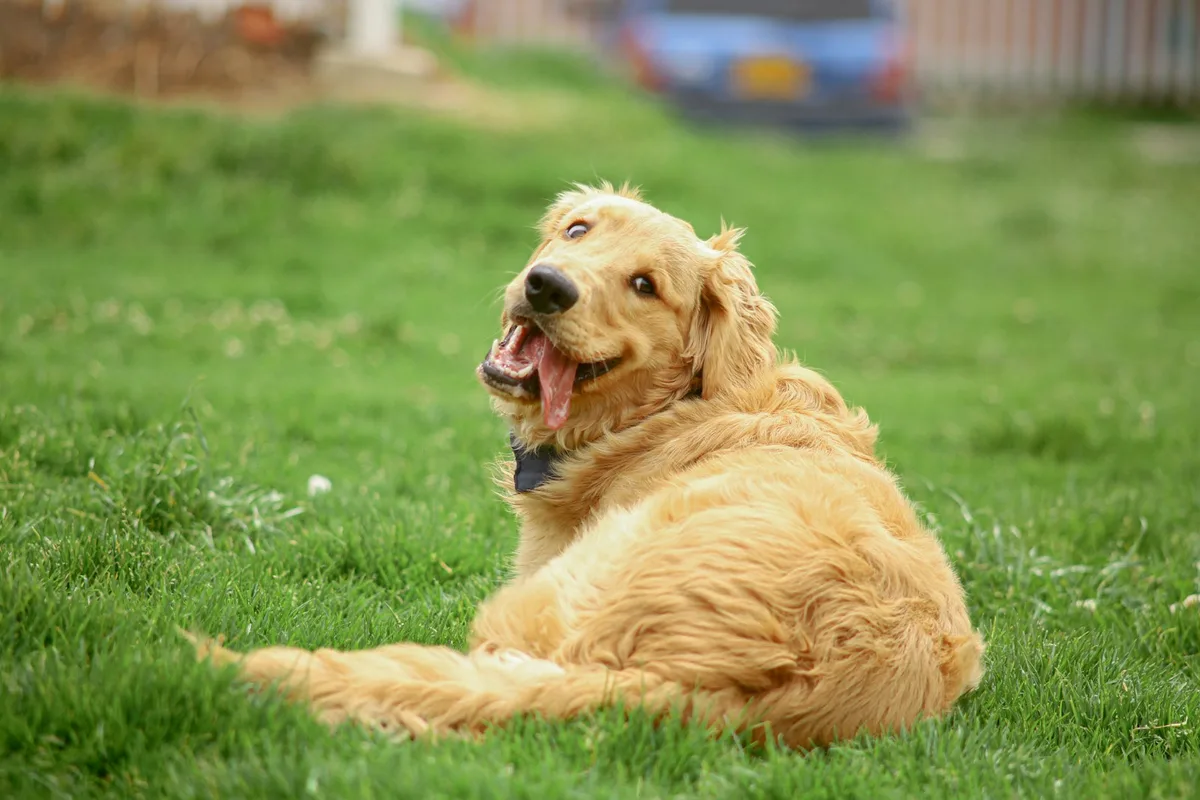
The brushing kit I’d buy
The AKC’s grooming guide for the breed recommends a pin brush for the coat and a metal comb for the feathering, and it warns that a bristle brush won’t get through a Golden’s coat. Here’s what I’d keep in the basket:
- Pin brush, for back-brushing
- Slicker brush (the AKC breed page suggests one for weekly brush-outs)
- Metal comb for the ears, chest, legs and tail, where the feathering tangles first and mats hide
- Undercoat rake for blow season, used gently so it doesn’t scrape skin
- My rubber curry brush for bath time, the trick from my own coat-blow afternoons
I’d skip the bristle brush entirely. It slides over the top and leaves the undercoat where it is.
A weekly routine that works
Here’s the order the AKC’s grooming advice points to, and it’s the one I’d stick with:
- Back-brush the whole body with a pin brush, against the direction of hair growth, to loosen dead undercoat
- Brush it back down the normal way
- Comb the feathering behind the ears, on the chest, legs and tail, where mats start
- Check the skin as you go for redness, lumps or fleas
That takes maybe 15 minutes on a calm dog. During a coat blow, do it every day, as the AKC suggests.
Bathing to loosen the undercoat
A bath won’t stop shedding, but it pulls out a surprising amount of loose undercoat at once. The AKC suggests a monthly soak for a pet Golden and two rinses, because the double coat holds shampoo. Brush before and after the bath.
Dry the coat completely. The AKC notes that a Golden must be fully dry before brushing begins, and a damp undercoat left against the skin is how hot spots get started. A cool dog dryer, blown against the direction of growth, speeds this up a lot. I use a high-velocity dryer on Buck for the same reason.
Don’t shave a Golden to stop shedding
Shaving doesn’t stop shedding. You’d just get shorter hairs falling out on the same schedule. The AKC says don’t shave or clip the coat, since it protects the dog from weather and sun. A shaved double coat can also grow back patchy. I go through the safe trims in my Golden Retriever haircut guide, and none of them touch the body coat.
Food, water and the coat
A Golden on a complete, balanced diet usually has a decent coat. Merck lists protein deficiency as a cause of poor hair growth, which is one more reason to skip cheap foods that don’t meet AAFCO standards.
Fish oil gets mentioned a lot for coats. It may help some dogs with dry skin, but it won’t stop normal shedding, and dosing is a vet question. Fresh water matters more than people think, too.
Living with the hair
You’ll make peace with Golden hair, or it’ll drive you mad. I’ve found that a few house habits matter more than any gadget:
- Washable throws on the couch, swapped weekly
- A robot vacuum, run daily during blow season
- Lint rollers in the car, in every coat pocket and next to the front door
- Brushing outside when the weather’s dry, so the wind takes the hair and not your carpet (in Oregon, that means waiting for a dry day)
- Seat covers
Hair is also a small price for what Goldens give back. Their gentle mouths and easy temperament are why so many families put up with the vacuuming. If you want to know more about the breed beyond its coat, our list of things most people don’t know about Golden Retrievers is a fun read.
FAQ
Do Golden Retrievers shed a lot?
Yes. Goldens shed a lot, with an AKC shedding score of 4 out of 5. They shed moderately all year and heavily once or twice a year when they blow their undercoat. Weekly brushing handles the everyday shed, and daily brushing gets you through a blow.
When is Golden Retriever shedding season?
It usually comes in spring and fall, when the undercoat thickens or thins for the weather. Each heavy shed lasts a few weeks. Dogs that live mostly indoors often shed more evenly through the year instead of in two clear seasons.
Do Golden Retriever puppies shed?
Yes, but lightly. Puppy fluff doesn’t drop much hair. Heavier shedding starts when the adult coat grows in, which the AKC puts at around 4 to 6 months for most puppies, though some start at 3 months and some closer to 12.
Can you get a hypoallergenic Golden Retriever?
No. Purebred Goldens all have a shedding double coat, and allergy groups say no dog breed is truly non-allergic. Golden mixes with Poodles may shed less, but they still produce the dander and saliva allergens people react to.
How do I stop my Golden Retriever from shedding?
You can’t stop it, but you can control it. Brush once or twice a week, daily during a coat blow, bathe about once a month, and dry the coat fully. Don’t shave the coat. See a vet for bald spots, itching or a thinning tail.
My last word on Golden hair
I won’t pretend the hair isn’t real. I live with a Lab now and still find retriever hair in places it has no business being. But a brushed Golden sheds onto your brush, and a neglected one sheds onto your couch. Pick the brush.


